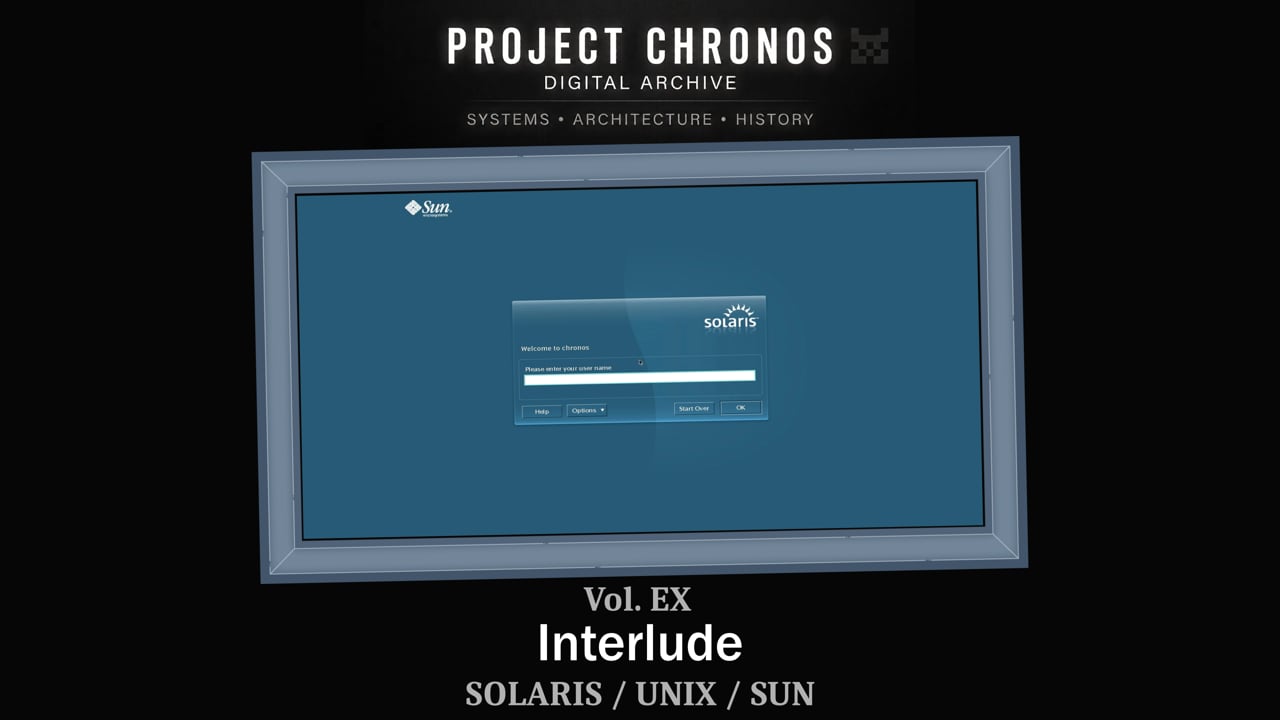
Vol. EX – Interlude
Interlude An interlude composed from footage across PROJECT CHRONOS Vol. 1 – 4. A public test of presentation and playback, between fragments of the past and a new beginning. PROJECT CHRONOS – Digital Archive
Interlude An interlude composed from footage across PROJECT CHRONOS Vol. 1 – 4. A public test of presentation and playback, between fragments of the past and a new beginning. PROJECT CHRONOS – Digital Archive

Abstract: "Fault-tolerant quantum computing requires a universal gate set, but the necessary non-Clifford gates represent a significant resource cost for most quantum error correction architectures. Magic state cultivation offers an efficient alternative to resource-intensive distillation protocols; however, testing the proposal’s assumptions represents a challenging departure from quantum memory experiments. We present an experimental study of magic state cultivation on a superconducting q

Weekend project, uses Whistle (16.9 MB)<p>- Press and hold a key to record, release to transcribe and paste the text.<p>- Automatically mutes system audio while recording, so it works even when listening to music.<p>- Runs entirely locally, no cloud required.<p>- Tested on Ubuntu 26.04.<p>- Works for up to 30 seconds (Whistle limit)<p>Maybe someone will find it useful. Cheers!

Hi HN, I'm Dat.I started building TablePro last December because I want a native, open-source database client for Mac. I already used TablePlus there before with free but have too much limit, so I built my own.TablePro is written in Swift and currently supports more than 30 databases. It’s lightweight and very fast.The app core is free, other extra features like iCloud Sync, ... are paid to help fund development.TablePro also has an available iOS/iPad version on App Store, and a Linux

Hi HN!I made git-dupe to solve the problem where I have notes, skills, and agent instructions that are part of my personal workflow, so I do not want them committed to the public repo, but at the same time, I want them to be in the project at the correct locations (e.g., AGENTS.md file locations matter), and these files cannot be simply gitignored because I want versioning for them.The solution that I've come upon is versioning those agent files in another repo, say <private-repo> (th

Features: - Partial support for Iris-compatible shaders - Supports 1.21.11 and 26.1.1 - Builds for Linux, Windows and Android - Optional module system/clickgui

Hey HN, I'm Christian and this is a new OSS project I've been noodling on for the last couple of weeks. Hob is a free, MIT-licensed desktop app for Mac, Windows and Linux that works on your files the way the Claude and ChatGPT desktop apps do, except the model runs on your own computer. It uses open-weight models (currently Gemma 4 and gpt-oss). All your chats and files never leave your system. The only things that go online are web search (can be turned off in settings) and any MCP co

Earlier this year, I started developing Termcraft, a terminal-based 2D survival game written in Rust.Since its first release more than half a year ago, I've added multiplayer support, so you can now host a game and play with friends (or colleagues during a meeting?); Up to 8 players. I've also substantially improved the visuals, lighting, physics, and overall gameplay. A friend and I ended up spending the entire weekend playing through the game from start to finish.The progression take

For the busy people out there, the GitHub repo has a demo video so you can see if this is worth your time: https://github.com/arcanemachine/pw-replThe video was created by Opus 5.5; I just asked it to create a demo video (it has a 'record' tool), so I think this is a good idea of how well it can work with the tool.---pw-repl is a tool that makes it easy for you and your agents to work with Playwright+CDP in a browser (your current headed session, or a headless one,

Unix has its fingerprints all over Linux, and it's why it feels so different compared to Windows ...

A new Linux utility, arc-rebar, enables Resizable BAR on older motherboards for Intel Arc GPUs without requiring BIOS ...

The Linux 7.4 block/storage and IO_uring updates were merged today for the ongoing merge window. With the breadth of Linux ...

I regularly need to move files between my Linux PC and my Android phone, but there are surprisingly few good options. You can ...

Google's Linux Terminal Preview brings AI agents and developer tools to Googlebook. Explore its features, security controls, ...

WordPad is one of the most recent classic Windows apps to be discontinued, so it only makes sense to start the list with it.

If you've been frustrated over the lack of a good PDF editor in Linux, the developers at ArtCraft have delivered exactly what you need.

Life's too short for dull desktops, and Xfce is so customizable that there's no excuse.

Unix has its fingerprints all over Linux, and it's why it feels so different compared to Windows ...

You cannot secure what you cannot see, and you cannot manage what you have not documented. Industrial Defender shows how its OT Asset Management solution builds a single, trusted record of every asset in your OT environment, from workstations and servers to PLCs, RTUs, relays, and firewalls. Most organizations still manage OT assets with spreadsheets, manual walk-downs, and tribal knowledge. That data goes stale within days. Industrial Defender replaces it with an automated, always current

What does your OT security platform actually see at Purdue Level 1? Most OT visibility tools stop at the network. They infer what is on the wire and leave the device itself as a black box. Our agentless active collection talks to Level 1 devices in their own languages, including DNP3, Modbus, IEC 61850, S7, EtherNet/IP (CIP), and DeltaV, to pull firmware versions, configurations, ladder logic changes, and device details that network traffic alone cannot reveal. WHAT YOU WILL SEE IN THIS VIDE